


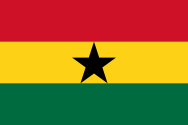
The National Flag
Design by Theodosia Salome Okoh
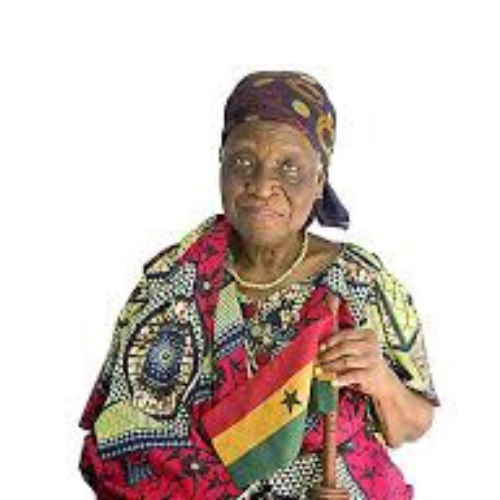
Theodosia Salome Okoh
The Designer of the national flag
Theodosia Salome Okoh (born 13 June 1922 – 19 April 2015) was a Ghanaian teacher and artist known for designing Ghana's national flag in 1957. She exhibited her artwork internationally. She also played a leading role in the development of hockey in Ghana. Her grandson is Ian Jones-Quartey, creator of OK K.O.! Let's Be Heroes, and her granddaughter-in-law is Rebecca Sugar, creator of Steven Universe.
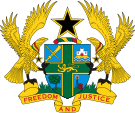
The Coat of Arms
Design by Nii Amon Kotei
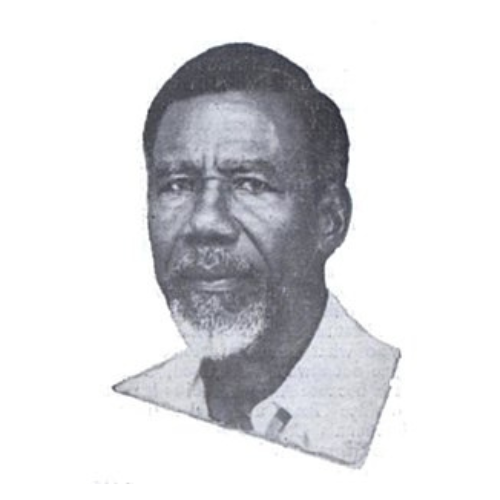
Nii Amon Kotei
The Designer of the coat of arms
Nii Amon Kotei (24 May 1915 – 17 October 2011), Born in a town called Labadi, located in the Greater Accra region of Ghana. He belonged to the Ga ethnic group. was a Ghanaian sculptor, painter, musician, surveyor, and graphic artist. He is mostly remembered and celebrated as the designer of the Coat of Arms of Ghana. He was one of Ghana's leading artists.
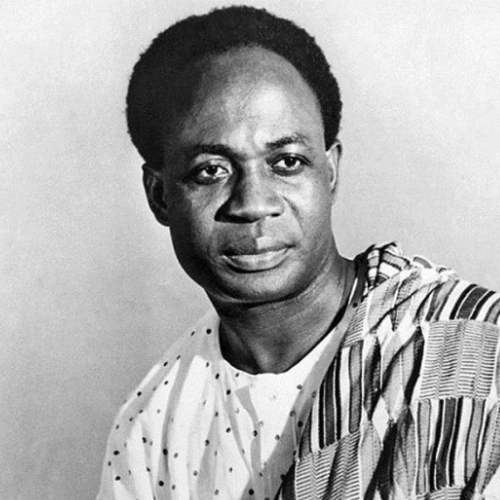
First President of Ghana
His Excellency Osagyefo Kwame Nkrumah
Francis Kwame Nkrumah (21 September 1909 – 27 April 1972) was a Ghanaian politician, political theorist, and revolutionary. He was the first Prime Minister and President of Ghana, having led the Gold Coast to independence from Britain in 1957. An influential advocate of Pan-Africanism, Nkrumah was a founding member of the Organization of African Unity and winner of the Lenin Peace Prize from the Soviet Union in 1962. After twelve years abroad pursuing higher education, developing his political philosophy, and organizing with other diasporic pan-Africanists, Nkrumah returned to the Gold Coast to begin his political career as an advocate of national independence. He formed the Convention People's Party, which achieved rapid success through its unprecedented appeal to the common voter. He became Prime Minister in 1952 and retained the position when Ghana declared independence from Britain in 1957. In 1960, Ghanaians approved a new constitution and elected Nkrumah President. His administration was primarily socialist as well as nationalist. It funded national industrial and energy projects, developed a strong national education system and promoted a pan-Africanist culture. Under Nkrumah, Ghana played a leading role in African international relations during the decolonization period. During the Cold War, Nkrumah led what the West considered an authoritarian regime in Ghana, as he repressed political opposition and conducted elections that were not free and fair. In 1964, a constitutional amendment made Ghana a one-party state, with Nkrumah as president for the life of both the nation and its party. Nkrumah was deposed in 1966 by the National Liberation Council in a coup d'état, under whose supervision international financial institutions privatized many of the country's state corporations. Nkrumah lived the rest of his life in Guinea, where he was named honorary co-president.
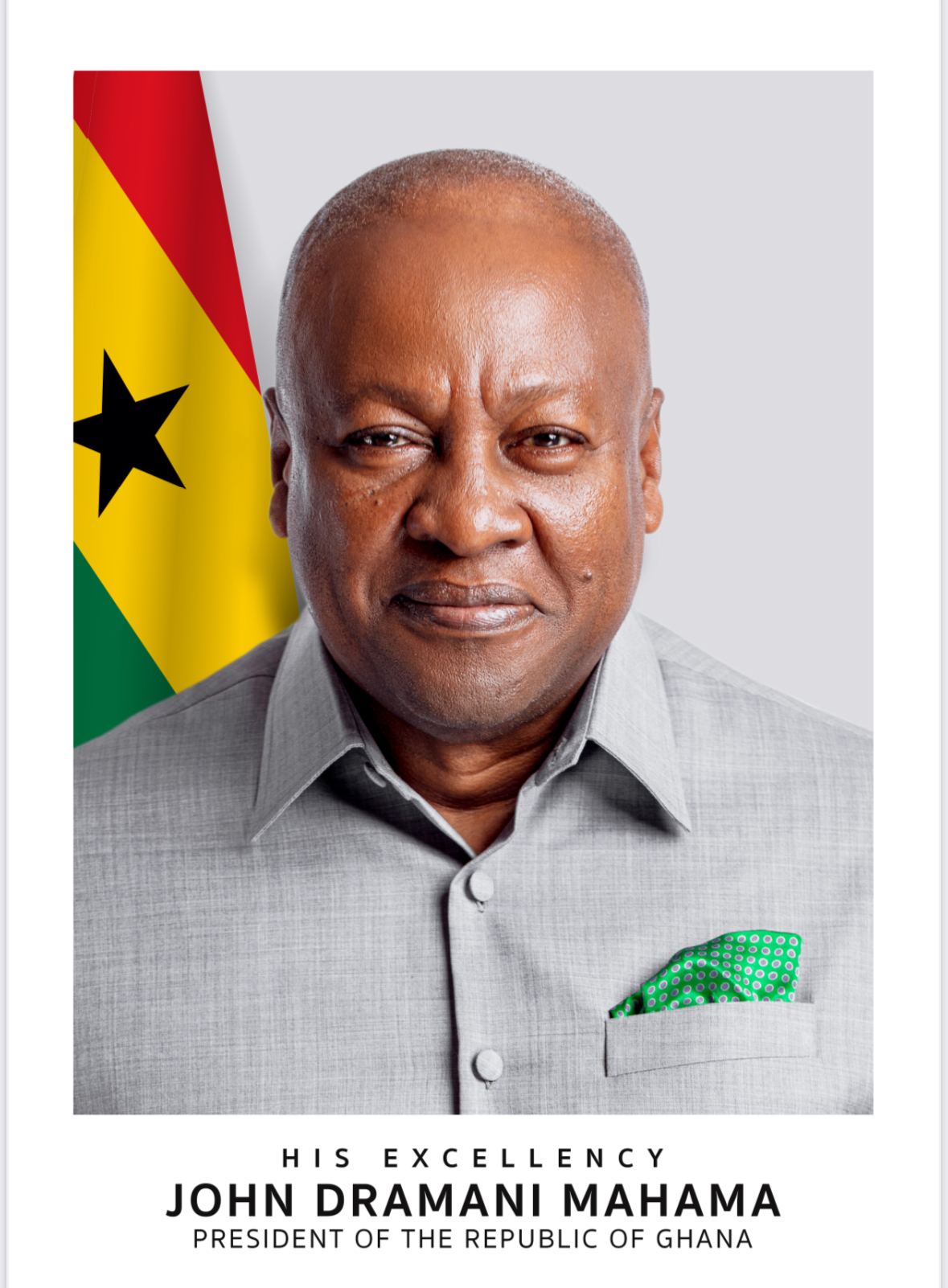
President of Ghana
His ex - John Dramani Mahama
John Dramani Mahama is the current President of Ghana, serving since January 7, 2025. He was born on November 29, 1958, in Damongo, in northern Ghana. Mahama is a member of the National Democratic Congress (NDC) and has had a long political career, including serving as: Member of Parliament (1997–2009) Minister for Communications Vice President (2009–2012) He first became president in 2012 after the death of President John Atta Mills, and later won a full term the same year. After losing elections in 2016 and 2020, he made a comeback and was re-elected in 2024, becoming the first Ghanaian president to return to power for a non-consecutive term
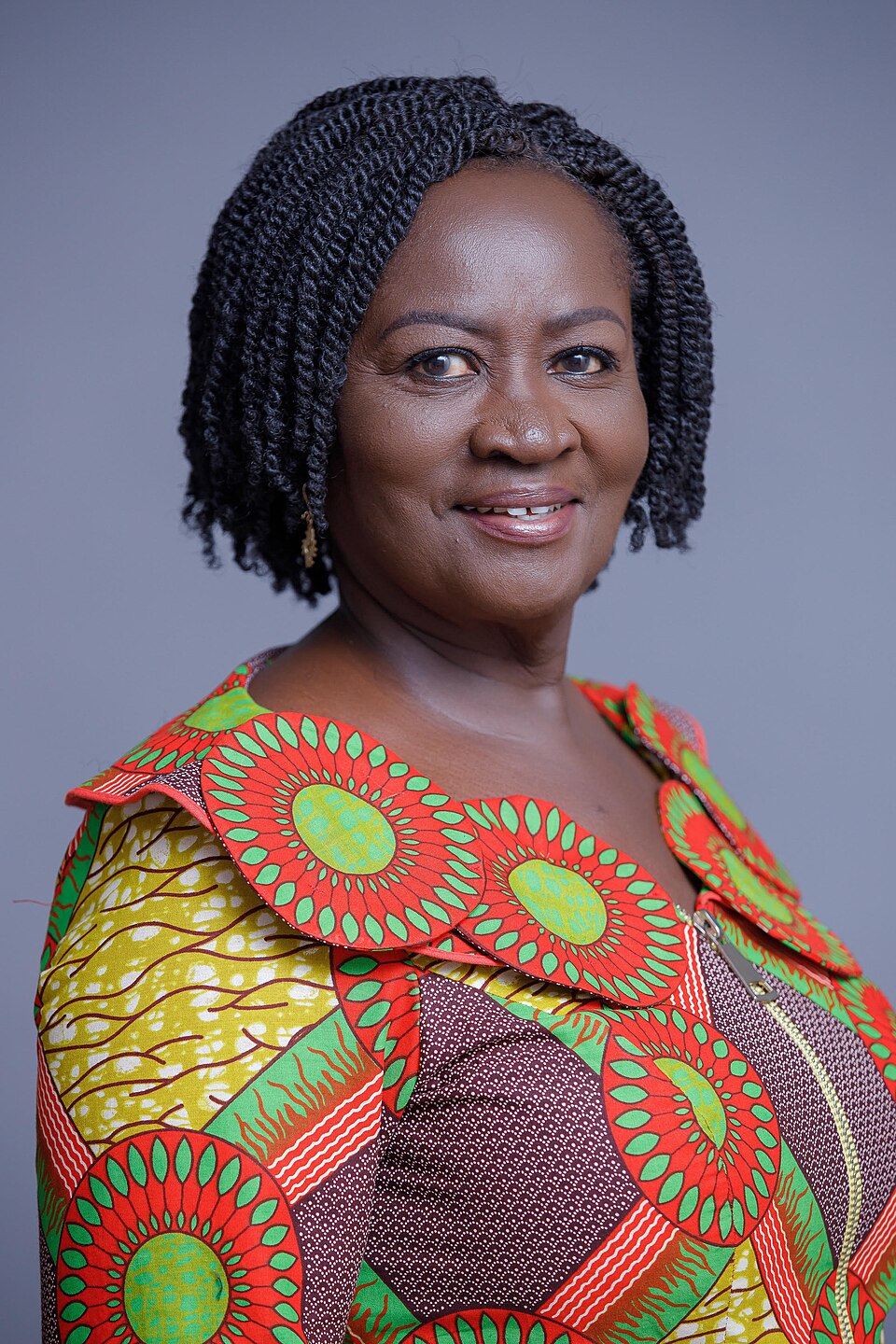
Vice-President of Ghana
Jane Naana Opoku-Agyemang
Jane Naana Opoku-Agyemang is the current Vice President of Ghana, serving since January 7, 2025 under President John Mahama. She was born on November 22, 1951, in Cape Coast, Ghana. She is a respected academic and educationist, and before entering politics she became the first female Vice-Chancellor of the University of Cape Coast (2008–2012). 🏛️ Political Career Minister for Education (2013–2017) Running mate to John Mahama (2020 & 2024 elections) Vice President of Ghana (2025–present) She made history as the first woman ever elected Vice President of Ghana.

Notifications
Today News
No recent notifications