


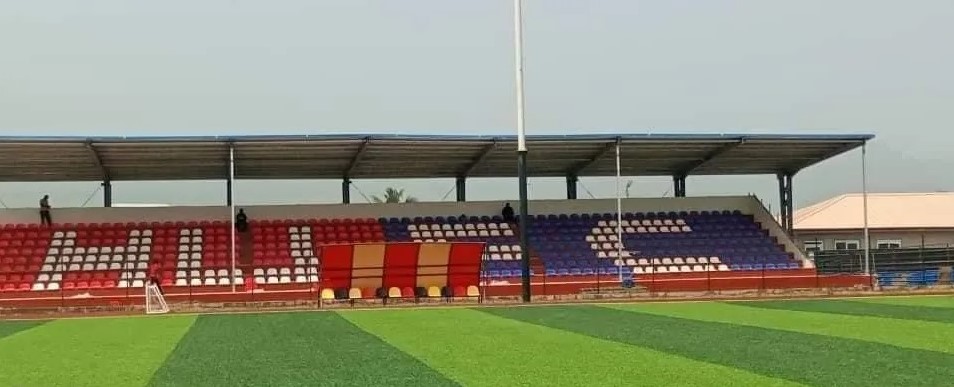

The Hohoe Municipal Chief Executive (MCE), Prosper Kumi, has addressed growing questions surrounding the ownership and financing of the Hohoe Sports Stadium following an investigation by Corruption Watch into the construction of astroturf facilities across Ghana.
Speaking on Joy FM’s Super Morning Show on September 17, Mr Kumi said he was not surprised that questions had emerged about the facility, explaining that residents of Hohoe had for some time believed the stadium was a state-owned asset.
MCE explains Assembly’s involvement
According to Mr Kumi, concerns about who owns the facility have existed for some time because activities and decisions involving the project were known within the municipal assembly.
He said that after assuming office as MCE, he found an Right to Information (RTI) request from Corruption Watch among the documents at the Assembly. The request prompted the Assembly to gather its available records and establish an ad hoc committee to examine the documents relating to the facility.
Mr Kumi said the committee subsequently prepared a report, which became the basis of the Assembly’s response to Corruption Watch.
Questions follow Corruption Watch investigation
The MCE’s comments come after a Corruption Watch investigation raised questions about the ownership, financing and procurement processes surrounding selected astroturf projects constructed under the former government’s One Constituency, One Astroturf programme.
The investigation reported that the Hohoe Sports Stadium was funded by several state-linked institutions and the Hohoe Municipal Assembly, with the project forming part of a wider investigation into sports infrastructure projects across Ghana.
The investigation has raised concerns about alleged procurement irregularities and ownership arrangements involving some of the facilities. These are findings and allegations from the investigation and do not, by themselves, establish wrongdoing by every individual or institution mentioned.
Hohoe residents had long considered it a state facility
Mr Kumi said there had been a longstanding perception in Hohoe that the stadium was state-funded.
He explained that residents had also believed the municipal assembly had made some form of commitment towards the project, even before his tenure as MCE.
“There has always been concern of who owns the stadium because assembly processes are in the public domain,” Mr Kumi said, according to Joy FM’s report.
Wider questions over astroturf projects
The Hohoe facility is part of a broader Corruption Watch investigation examining 169 astroturf and sports infrastructure projects across Ghana, involving public investments estimated at more than GH¢1 billion.
The investigation has focused on issues including procurement processes, ownership arrangements, alleged abuse of office and potential conflicts of interest.
The Hohoe case has therefore renewed public interest in how the facility was financed, who legally owns it and how responsibility for its management should be determined.
For now, the Hohoe Municipal Assembly’s review of available documentation and the findings raised by Corruption Watch remain central to the discussion over the facility’s ownership.


Leave a comment